
Exhibition Review: The British Library's 'Agatha Christie: A World of Mystery'

Updated: 1 hour ago
Agatha Christie: A World of Mystery is arguably the most significant Christie exhibition staged in Britain since the 2001-2002 exhibition, Agatha Christie and Archaeology: Mystery in Mesopotamia, which was held at the British Museum.

I believe this is more important as it recognises the broad talent Agatha Christie had as a musician, story-teller, playwright, archaeologist, pharmacist, mother, and wife. One leaves this exhibition in awe of what a strong, independent, confident and successful woman Agatha was. Just, 'Wow'.
Overview
For Agatha Christie enthusiasts, 2026 marks an extraordinary convergence of anniversaries. It is both the centenary year of The Murder of Roger Ackroyd and fifty years since Christie's death. To commemorate these milestones, the British Library has mounted this major exhibition that explores the life, travels, influences, and creative process of the world's bestselling novelist. I was fortunate to be invited to the launch event on Thursday October 29, 2026, given that I had contributed two essays to the exhibition’s companion book so this is a 'first look' at this fabulous exhibition.

Unlike many literary exhibitions that simply line walls with manuscripts and first editions, this one was designed as an immersive journey through the various worlds that shaped Agatha Christie’s life and writings. Visitors move through a series of creative & atmospheric environments, each connected to a defining aspect of her life which then clearly influenced her work.
Whether you're a lifelong fan of Agatha Christie, a collector, a casual mystery reader, or just someone who appreciates learning about great and influential people, this exhibition is a must-see and will likely be one of London’s (and the world's) cultural highlights for the months ahead. If you come to London to see this exhibition, consider planning an Agatha Christie-themed London weekend which is something I’ll be writing about shortly – so if you haven’t yet subscribed to this website please do so (link) which ensures you receive an email as new articles are written, including my upcoming travel itinerary.
The Basics
The exhibition, Agatha Christie: A World of Mystery, runs from 30 October 2026 through 20 June 2027 at the British Library in London. The British Library, at 96 Euston Road, NW1 2DB, sits beside St Pancras International and King's Cross Station, making it one of the easiest major museums in London to reach by Underground, national rail, Eurostar, or bus. Tickets need to be booked as entries are timed and limited. Prices range from £20 - £25 while British Library Members are free. Concessions available for students, young people, disabled visitors, carers, and National Art Pass holders.
Given the scale of material on display, the immersive environments, and the hidden clues scattered throughout the galleries, most Christie enthusiasts should plan on spending two hours for the exhibition itself. This also allows time to read notebooks, correspondence, and interpretive panels rather than simply passing through.
What Makes This Exhibition Special?
Many Christie exhibitions focus on her books while this exhibition focuses on Agatha, the individual and impressive woman. It draws extensively from her letters and notebooks, as well as photographs, manuscripts, personal possessions and family archives. The curators of this exhibition are clearly seeking to demonstrate how Christie's experiences became the raw material from which she built her mysteries. They secured numerous items to display which have reportedly never been publicly displayed before. The robust nature of the items on display was clearly aided by their collaboration with Agatha Christie Limited and the Christie Archive Trust, which gave the curators exceptional access to original archival material.
At the launch, my conversations with Agatha's grandson, Mathew Prichard, and her nephew, John Mallowan, confirmed that they were also pleased with this exhibition and its focus on Agatha as a strong, successful and accomplished woman.
The Five Immersive Exhibition Sections.
Rather than following a simple chronological biography, visitors move through five environments that mirror the settings and experiences most important to Christie's work. The initial entryway with its large images and wall of translated novels builds the anticipation. Below, I've summarised the five zones in the sequence you experience them.
1. The Country House
The journey begins in perhaps the most iconic Christie setting of all: the English country house. Here visitors explore: Christie's childhood, her family life at Ashfield, early writing experiments and the development of the classic country-house murder mystery. On display are family photographs showing Christie as a child, including images of her at home and with friends.
There are also original paintings of her that visitors to Greenway may have seen. The curators draw connections between these formative experiences and later masterpieces such as The Mysterious Affair at Styles and And Then There Were None. For Christie readers, this section effectively serves as the origin story of her more traditional "golden age" mysteries. One highlight for me in this section was a first edition of The Mysterious Affair at Styles in an original first edition jacket - likely one of less than ten left in the world.
2. The WWI Dispensary
One of the most fascinating sections explores Christie's work during the First World War. Visitors encounter a recreated dispensary environment inspired by her wartime service as a nurse and dispenser. This experience illuminates one of the most underrated aspects of Christie's genius which is her sophisticated knowledge of chemistry and toxicology.
Highlights include Christie's pharmaceutical examination notes from 1917, materials related to her wartime training, as well as evidence of how medical and chemical knowledge informed her plots. The collective display helps explain why poison became something she could use effectively with great confidence. I really enjoyed seeing her notes about formulae for poisons - absolutely fabulous!
3. The Orient Express and Global Travel
Travel clearly transformed Christie from a writer of English-based stories into a global storyteller. The replica of 'Fred', her Hawaiian surfboard, was sadly a replica and was leaning up against the train, which was a bit odd, but that's a minor quibble as there are many fascinating items in this section. I enjoyed seeing the original script for Manx Gold, her treasure hunt written to promote tourism on the Isle of Man. The 'wow' factor in this section is the wonderfully constructed Orient Express-inspired railway carriage that forms the centerpiece of this section. A substantial expense was clearly spent on this exhibit with its moving scenes of snowy trees outside the windows, and the cabin doors that encourage you to try to enter to find what's inside.
The gallery explores Christie's international journeys, long-distance rail travel, and the resultant global settings she used in her fiction, as well as the development of Murder on the Orient Express. Particularly intriguing are personal letters discussing her travels, including correspondence to Max Mallowan describing one of her actual Orient Express journeys.
A nice selection of family photographs document Christie in places including Egypt, Hawaii and Southern Africa. Collectively, these photographs paired with the displays reveal a far more adventurous person than the perception of Agatha many casual readers may default to.
4. Archaeology and the Middle East
Most readers know Christie through her written works and stage plays. However, few casual readers likely appreciate how important archaeology was in her life. After marrying archaeologist Max Mallowan, Christie spent extensive periods in Iraq and Syria. The exhibition cleverly recreates an archaeological dig site to explore this dimension of her life. With lanterns and a desert tent, scattered crates and other thematic props, this quickly shifts the visual narrative from the Orient Express train.
Among the artifacts featured are archaeological photographs, film footage from excavations (thank you John Mallowan), a Leica camera similar to the one she used, and objects connected to her Middle Eastern travels. This section not only demonstrates how her archaeological experiences inspired novels but also how important archaeology itself was to her. Novels such as Murder in Mesopotamia, Appointment with Death and Death on the Nile clearly benefitted from Christie's onsite field experiences and her unique understanding of human behavior across cultures learned through her travels.
5. Theatre and Adaptation
The exhibition concludes in London's theatrical world. This section explores Christie's stage adaptations, her work as a playwright, the enduring success of The Mousetrap, as well as modern film and television interpretations.
Some of the highlights in this section include her notes for Witness for the Prosecution, ephemera documenting her own stage adaptations of her stories, costume elements from screen productions, as well as consideration of her continuing influence on film and television entertainment worldwide.
The visitor exits past the portrait of Agatha painted by Oscar Kokoschka in 1969 to commemorate her 80th birthday. It is a fitting item to close the visit and make the attendee ponder the legacy and life of such an accomplished woman.

Notable Objects on Display
For me there were several artifacts that stood out as core pieces of the exhibit, warranting a visit. These included Christie's 1937 Remington typewriter which is I found to be one of the exhibition's star attractions. The typewriter is believed to have been used while composing And Then There Were None and other works from her productive 1930s period of her career. One can almost envision her sitting at the typewriter, hard at work.
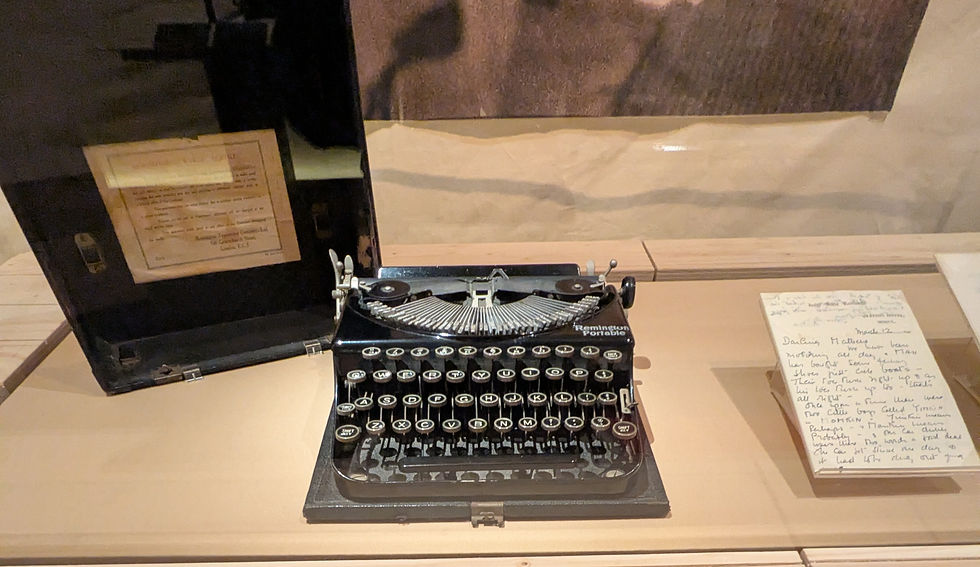
Another highlight was the typescript of House of Beauty, which is identified as Christie's first short story and written when she was a teenager. This offers a rare glimpse at the early writings of Christie before she honed her craft. The story is unpublished which is likely due to the fact that it was such an early writing and likely in need of revision and editing - something probably best left undone.
I also found her pharmaceutical examination notes from 1917 to be a highlight. These study notes from shed a light on the scientific training she received that later allowed her to write stories that convincingly leveraged her knowledge of poisons. Readers and fans all know she had this knowledge, but seeing her notes makes that knowledge more real.
However, it is her personal correspondence that helps to reveal Christie as a daughter, wife, traveler, business woman and friend rather than merely a literary genius that were most impactful. I found particularly interesting her correspondence relating to her Orient Express train journeys.
In her later life, it is well known that she used a Dictaphone to help with the writing on her novels. The exhibition gives attendees the opportunity to hear Christie's own voice on a Dictaphone recording. The audio for her recording of Endless Night allows the listener to both hear her skill but also her frailty (image shown earlier in the Theatre section). It is a humbling experience to connect audibly with her commitment to her craft despite life's reality of aging thrown at her. For many attendees and fans, this opportunity to hear Christie herself may be one of the exhibition's most moving experiences as during her lifetime there were actually very few recordings of her, whether in interviews or conversation. So I assume this will be the first time some people will ever have actually heard her.
Hidden Clues and Easter Eggs.
A delightful aspect of the exhibition is its encouragement of detective work by the attendees. Curators have hidden clues and Easter eggs throughout the galleries which encourages visitors to search actively rather than merely observe passively.
This interactive element feels particularly appropriate for a writer whose readers have spent a century looking for hidden clues in her stories.
Summary.
Collectively, what makes Agatha Christie: A World of Mystery exceptional is the focus on the relationship between her real life and her works. As an attendee, I certainly gained a deeper understanding of the child who became the novelist, the wartime dispenser who mastered a knowledge of poisons, the traveler who crossed continents gaining experiences to write about, the archaeologist's companion who explored ancient sites that brought her great pleasure, and playwright who could write as effectively for audiences as she did for readers. While fans understand she is much more than the creator of Poirot and Miss Marple, this exhibition affirms it.
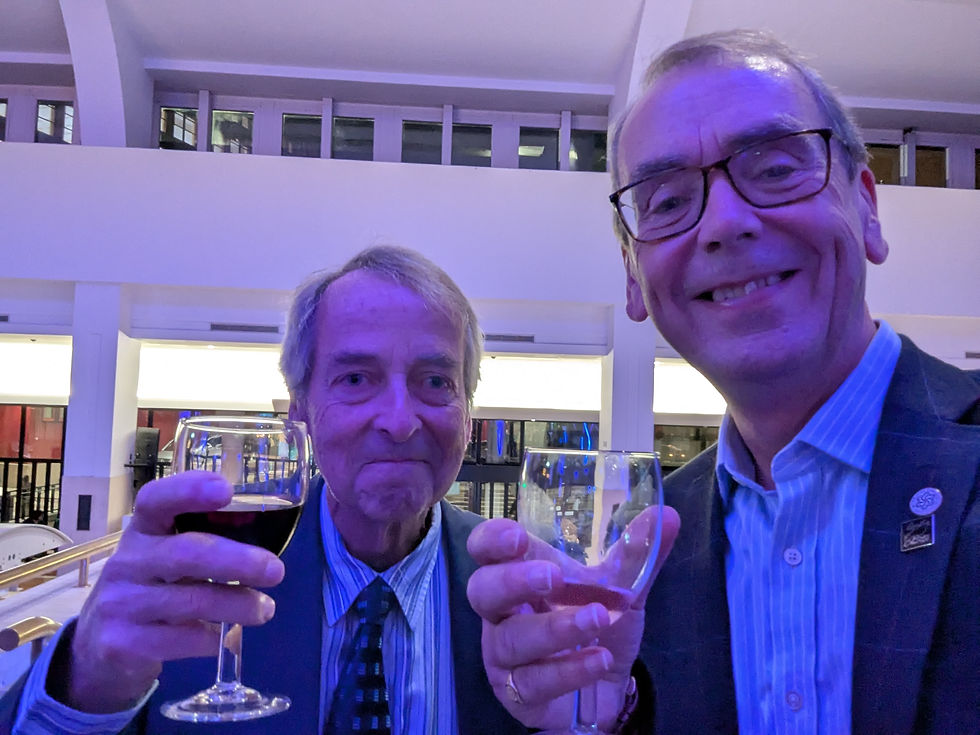
So 'cheers' from John Mallowan and me - I hope you get to come and experience the exhibition.
Closing Comments.
Do consider following me on Facebook, X and Instagram - I can be found on all of those platforms easily under the name 'Collect Christie' or 'Collecting Christie'.
Last, but not least, I can be reached at collectchristie@gmail.com - I enjoy hearing from you so don't be shy if there's something you want to share, a correction or edit to any of my articles or something you'd like to read about.
Happy Collecting!


Agatha Christie surfing was not on my bingo card today. 😆